Hybrid and EV Winter Care in Seaside and Monterey
You bought a hybrid or an EV to save on gas and skip some upkeep. That part works. Cool mornings and winter rain on the Monterey Peninsula still change how your car behaves. A few checks now keep your range steadier and your car ready for the storm season.
Why Your Range Drops When It Gets Cool
Heat is the big one. A gas engine makes spare heat for the cabin. An EV pulls that heat from the battery.
FuelEconomy.gov reports that at 20°F, EV range drops about 41% in mixed driving, and about two-thirds of that extra energy goes to heating the cabin. Hybrids lose about 30% to 34% of their city fuel economy in the same test. Seaside rarely gets that cold, so your loss will be smaller. The pattern still holds on a cool, damp Peninsula morning, once the heater and defroster come on.
What helps, per FuelEconomy.gov:
- Warm the cabin while your car is still plugged in, if you drive a plug-in hybrid or EV.
- Use heated seats and a heated steering wheel in place of high cabin heat.
- Check your tire pressure. Cold air lowers it, and low pressure costs you range.
- Combine short errands into one trip.
Don't Forget the Small Battery
Every hybrid and EV has two batteries. The high-voltage pack moves the car. A regular 12-volt battery runs the lights, screens, and computers.
NHTSA explains that most EVs and many hybrids do not use an alternator. A DC-DC converter keeps the 12-volt battery charged from the main pack. If that small battery goes weak, the systems that wake the car have no power, even with a full charge in the big pack.
Watch for warning lights, a slow wake-up when you press start, or screens and locks that act up. We test the 12-volt battery during your digital inspection, and you see the result on your phone.
Brakes That Sit Too Long
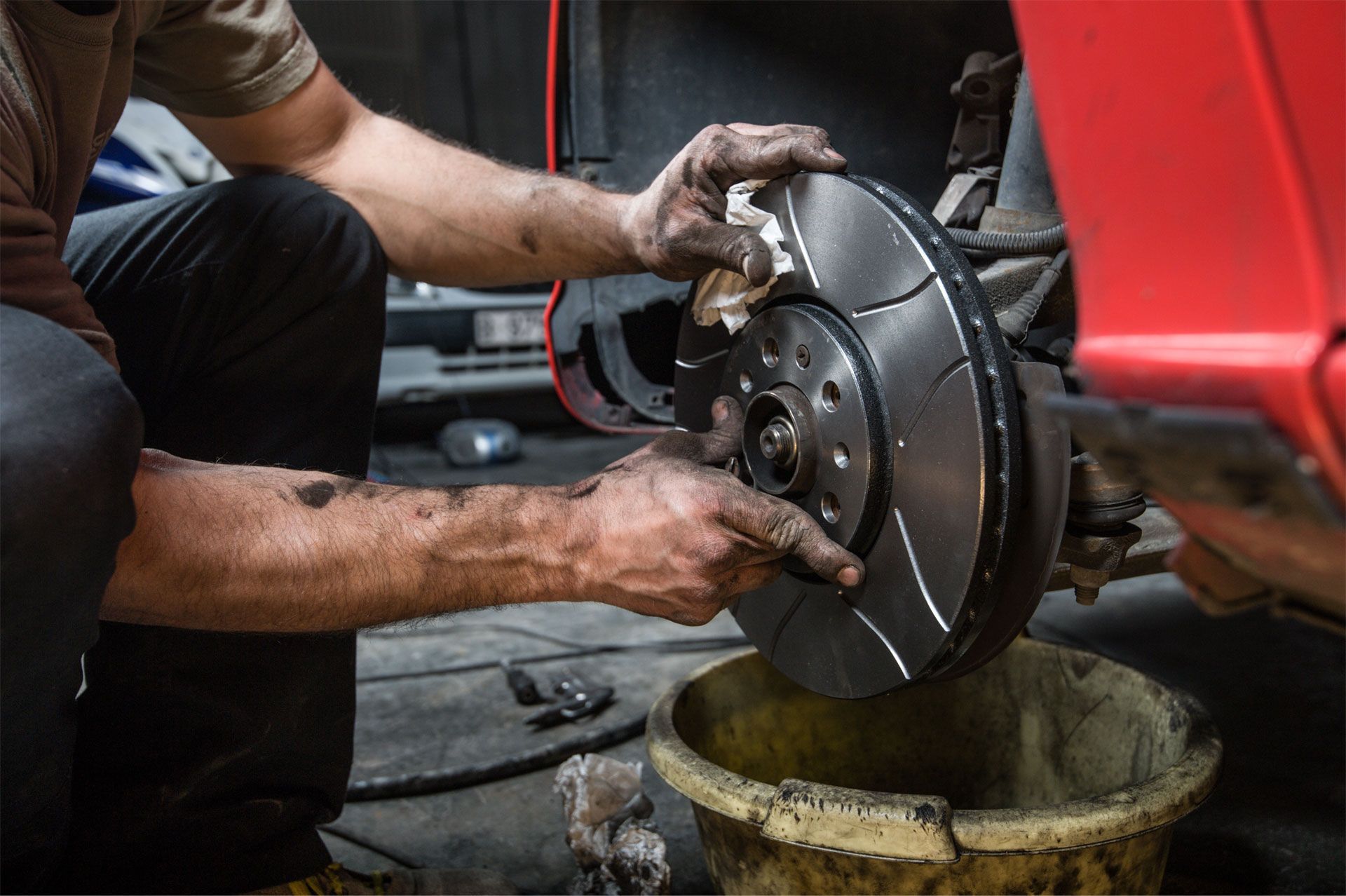
Regenerative braking is great for your pads. The motor slows the car and sends energy back to the battery, so your friction brakes see less work.
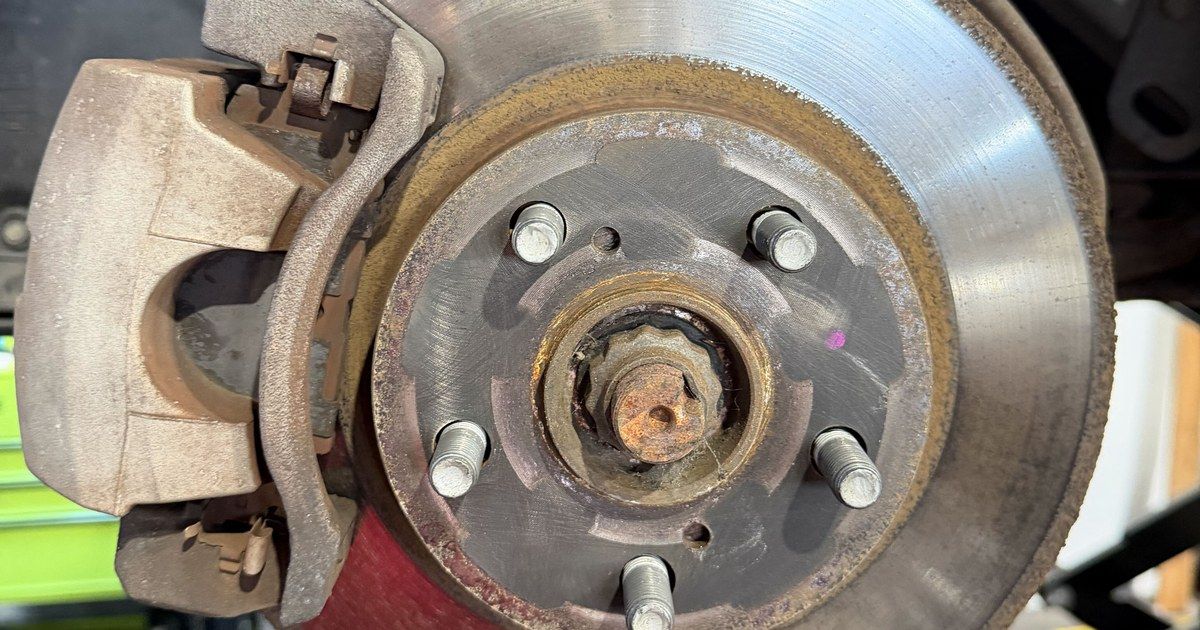
That creates a different problem here. Coastal fog and salt air keep parts damp. Brake parts that rarely work hard collect rust, and calipers start to stick. Your pads look thick, but the brakes do not move freely.
FuelEconomy.gov says gentle, early braking gets the most from regen. NHTSA notes that your car still uses its regular brakes in hard stops, so they deserve a regular look.
Tires Carry More Weight
Hybrids and EVs carry heavy batteries. Instant torque also puts more force on the tires when you pull away. Together, that wears tread faster on some models.
Before the rainy months, check tread depth, tire pressure from the sticker inside the driver's door, and even wear. Uneven wear points to an alignment issue. When you replace tires, match the load rating your car calls for.
Rain, Puddles, and High Voltage
Your hybrid or EV is built to drive in the rain, and charging in the rain is fine too, per NHTSA. Deep standing water is a different story. NHTSA warns that hybrid and EV batteries should not sit in standing water. If your car ends up in a flood, do not park it in your garage. Call your dealer or emergency services.
Who Should Work on Your Hybrid or EV
High-voltage systems are not a do-it-yourself job. NHTSA says your EV belongs with a technician trained in high-voltage work, with the right safety gear and tools.
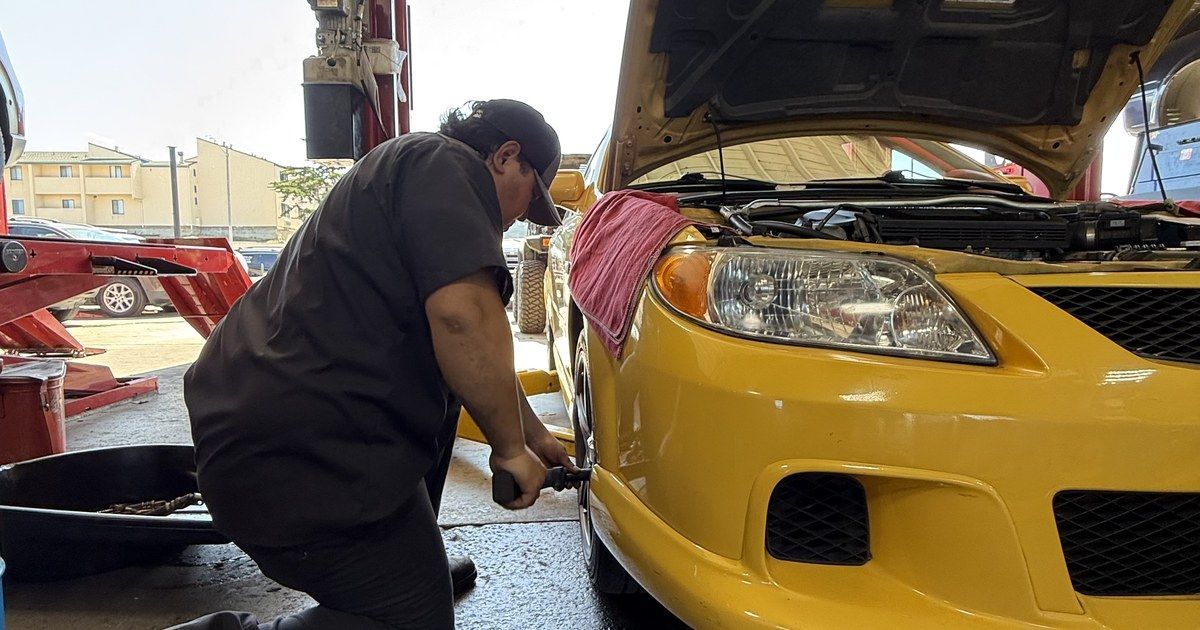
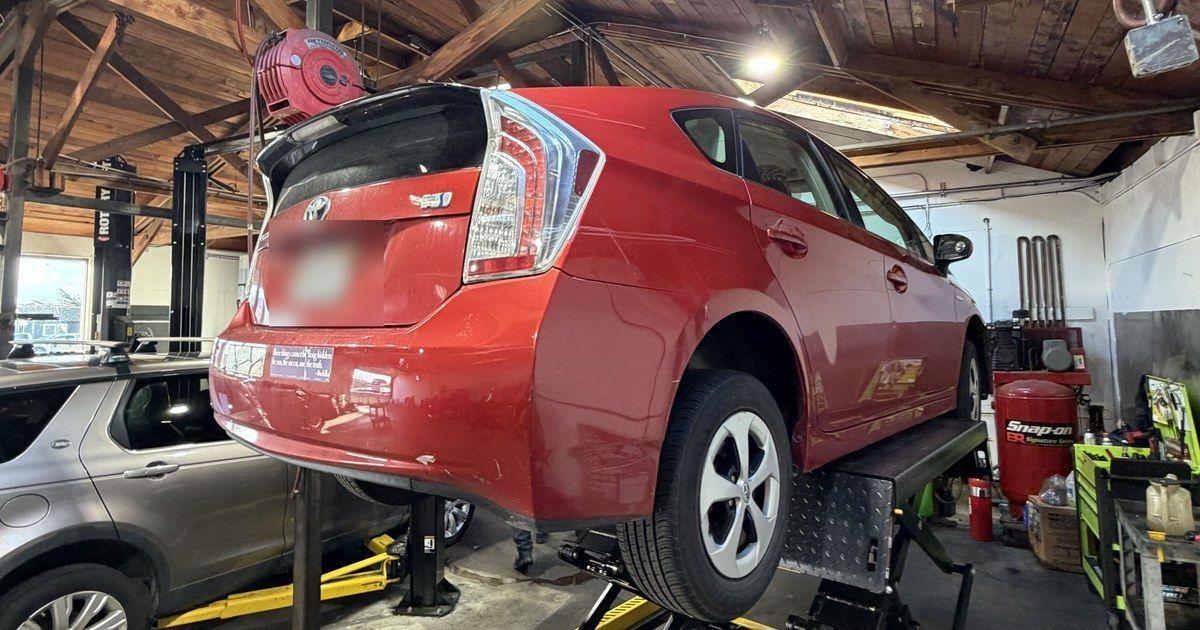
That is why we built our Ord Grove shop, with equipment for hybrids and EVs. Our team includes ASE Master Technicians, and one of our technicians holds the L3 Advanced Level Hybrid/Electric Vehicle Specialist certification. We still work on gas cars, trucks, and diesels at both shops.
When you bring your car in, our technicians do a digital inspection. You get photos and notes sent to your phone. We sort what we find into what is urgent, what holds for later, and what looks good. You decide what to fix and when. Repairs we do come with our 36-month, 36,000-mile nationwide warranty.
Visit Us in Seaside
- Ord Grove (Hybrid and EV Service): 1020 Ord Grove Ave, Seaside. Open 8:00 to 4:30, Monday to Thursday, and 8:00 to 4:00 on Friday.
- Del Monte: 2003 Del Monte Blvd, Seaside. Open 8:00 to 4:30, Monday to Friday.
FAQ
Does my EV still get oil changes?
A full EV has no engine oil. It still has coolant, brake fluid, cabin filters, and tires to care for. A hybrid has a gas engine, so it does get oil changes.
Is it safe to charge my EV in the rain?
Yes. NHTSA says plug-in chargers are weather-resistant. Follow your owner's manual.
Why won't my EV start when the battery shows a full charge?
Your 12-volt battery is likely weak. It powers the systems that wake the car up. We test it during your visit.
Book Your Hybrid or EV Check
Book online at waysidegarage.com or call (831) 899-2425. Learn more on our Hybrid and EV Service page. We'll look your car over, send you photos, and help you head into winter ready.
Sources: FuelEconomy.gov, Fuel Economy in Cold Weather | FuelEconomy.gov, Tips for Hybrids, Plug-in Hybrids, and EVs | NHTSA, Electric and Hybrid Vehicles