Wheel Alignment Near Me
Why ADAS Calibration Matters for Modern Cars
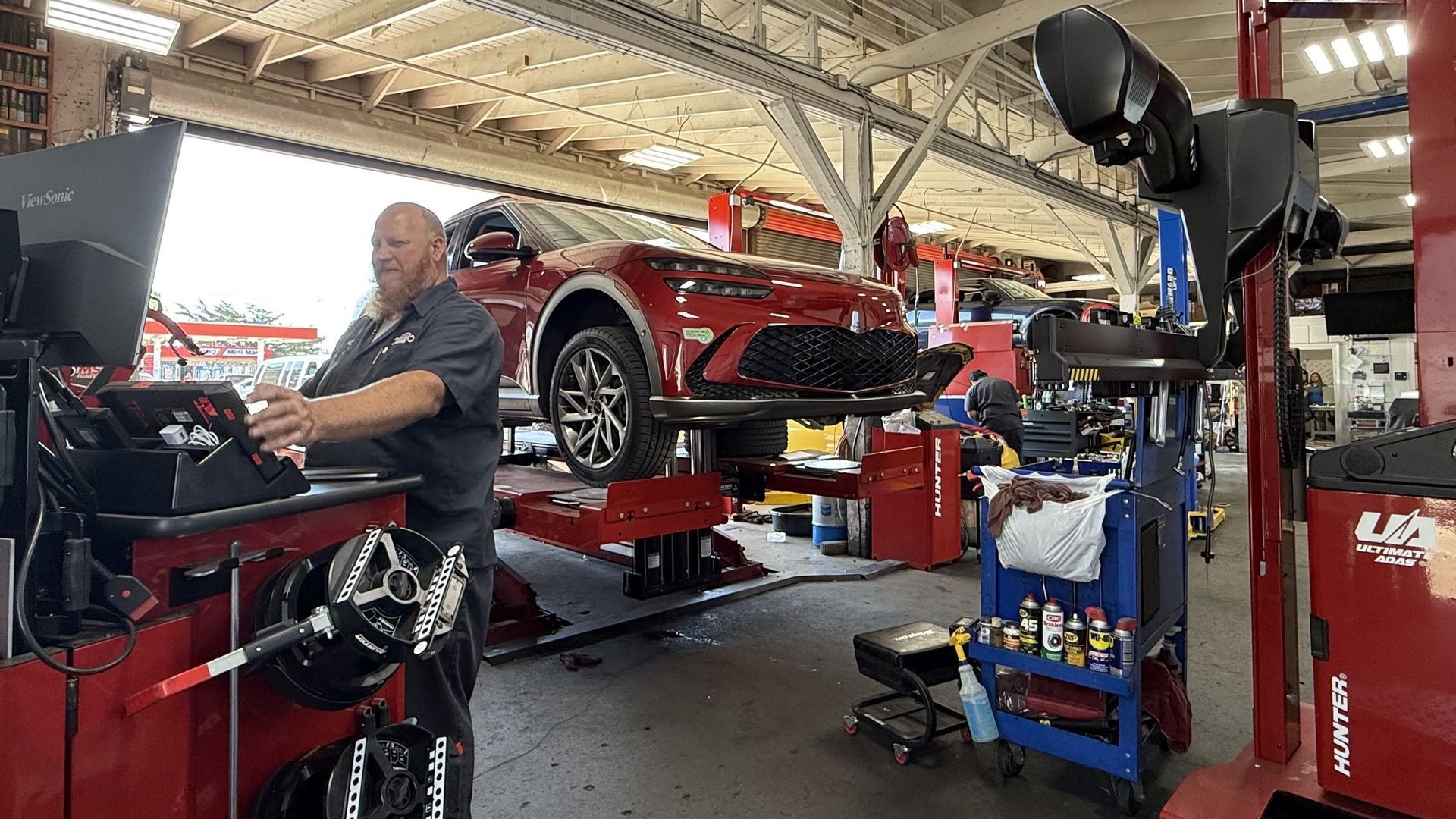
⚡ QUICK ANSWER Wheel alignment should be checked every 10,000 miles or 12 months. On modern vehicles with ADAS safety features (automatic braking, lane assist, blind spot monitoring), alignment must also include sensor recalibration — otherwise your safety systems may not function correctly. Wayside Garage in Seaside, CA offers precision alignment with ADAS recalibration using our new dedicated machine.
You're driving Highway 1 toward Carmel. You let go of the steering wheel for just a moment — and your car drifts, slowly but clearly, to the right. You straighten it out, chalk it up to the road, and keep going.
But it happens again the next day. And the day after that.
What you're feeling is wheel misalignment. And while the drift is the obvious symptom, the real concern — especially in a newer vehicle — runs a lot deeper than a steering wheel that won't stay centered.
What Is Wheel Alignment and Why Does It Matter?
Wheel alignment is the precise geometric relationship between your tires and the road. Every manufacturer sets specific angles — called camber, caster, and toe — that determine how your tires make contact with the pavement. When those angles drift, even slightly, things start going wrong in ways you might not immediately connect to alignment:
- Your tires wear unevenly — one edge wearing faster than the other — meaning you're replacing tires significantly sooner than you should
- Your fuel economy drops, because a misaligned car is constantly fighting itself and forcing the engine to work harder
- Handling becomes less predictable, which matters most in the moments when you need your car to respond instantly
- Steering feels vague, heavy on one side, or requires constant correction to drive straight
Alignment can shift gradually from normal driving — it's not just potholes. Road vibration, minor curb contact, even carrying heavy loads regularly can nudge your angles out of spec over time.
What Is ADAS — and Why Does Alignment Affect It?
This is the part most drivers — and many shops — don't fully understand.
ADAS stands for Advanced Driver Assistance Systems. If your car was made after 2018, you almost certainly have several of these features:
- Automatic emergency braking (AEB)
- Lane departure warning and lane keep assist
- Blind spot monitoring
- Adaptive cruise control
- Forward collision warning
- 360-degree cameras and parking sensors
These systems use a network of cameras, radar units, and sometimes LiDAR to build a real-time picture of everything around your vehicle. And here's the critical part: every one of these sensors is calibrated to function at very specific angles and positions.
When your wheel alignment shifts, the geometry of your vehicle changes. Cameras and radar units that were calibrated to look straight ahead may now be pointing slightly up, down, left, or right. The system still operates — it doesn't throw a warning light — but it may not detect hazards as quickly, may activate late, or may misread lane markings.
The same misalignment event that causes your car to drift also affects your automatic emergency braking. Most people never know.
Why Wayside Garage Invested in an ADAS Alignment Machine
We made a significant investment in a state-of-the-art ADAS calibration machine because we believe this is simply what proper alignment service looks like in 2026.
Most shops — including quick-service chains — still offer alignment the way it was done a decade ago: measure the angles, adjust the tie rods, done. That's fine for older vehicles. But for any car with ADAS technology, stopping there leaves the job half finished.
With our new machine, a complete alignment service at Wayside Garage includes:
- Precision multi-point wheel angle measurement and adjustment
- ADAS camera and radar sensor recalibration following alignment
- Post-calibration verification — we confirm every system is functioning correctly before your car leaves the bay
- A full documented report of pre- and post-alignment measurements
This level of service was previously only available at dealerships. You can now get it at your trusted independent shop in Seaside, with the personalized service and transparent pricing that dealerships rarely match.
Signs Your Alignment Needs Attention
- Car drifts or pulls to one side when you release the steering wheel
- Steering wheel is off-center when driving straight
- Tires showing uneven wear — one edge more worn than the other
- Steering feels loose, heavy, or less responsive than usual
- You recently hit a significant pothole, curb, or road debris
- You've had any suspension, steering, or front-end work done
- You've had your windshield replaced (ADAS camera recalibration required)
Frequently Asked Questions
How often should I get a wheel alignment? Wayside Garage recommends every 10,000 miles or 12 months as part of our annual maintenance plan — and any time you experience the symptoms listed above.
Does every car need ADAS recalibration after an alignment? Any vehicle made after approximately 2018 that has features like automatic emergency braking, lane departure warning, or blind spot monitoring should have ADAS recalibration performed after an alignment service.
What if my ADAS light is not on — are my systems still calibrated correctly? Not necessarily. Sensors can drift out of calibration without triggering a warning light. The only way to confirm calibration is to measure it directly — which is what our machine does.
If your car has been pulling to one side, your tires are wearing unevenly, or you've recently had any suspension work or a windshield replaced — it's time. Schedule your alignment and ADAS calibration at Wayside Garage. We'll make sure your car drives the way it should and protects you the way it was designed to. Book online at waysidegarage.com or give us a call.